Choosing a Commercial Laundry Dryer: A Real-World Energy Cost Comparison Among Gas, Steam, and Electric Models
For commercial laundry factory owners, dryers represent a massive chunk of ongoing energy consumption. Many owners struggle to decide between gas, steam, and electric models, wondering which one offers the lowest long-term operating costs. Based on industry test data and the infrastructure requirements of different plants, here is an objective analysis to help you make the right choice and avoid costly mistakes.
### 1. Electric Heating Dryers: Low Initial Cost, But High Long-Term Energy Drain
The primary advantage of electric dryers is that they require no boilers or gas pipelines, making the initial investment low for small, new shops. However, electric heating elements have a thermal efficiency of less than 40%, leading to severe heat loss. The electricity cost to dry 100 kg of linen often exceeds 60 RMB ($8.50+ USD). Due to having the highest long-term energy costs for large-scale production, electric models are only suitable for micro-laundries with a daily output of a few hundred kilograms. They are financially impractical for large plants over the long haul.
### 2. Steam Heating Dryers: Stable but Riddled with Hidden Losses
Steam dryers rely on boilers for heat. While they seem to offer a stable heat source, they actually suffer from multi-layered energy loss: boiler combustion loss, pipeline heat dissipation, and exhaust waste heat vented directly into the air. This drags their comprehensive thermal efficiency down to just 60%–75%. On top of that, owners must bear hidden expenses such as annual boiler inspections, licensed operator wages, and pipeline maintenance. For factories washing thousands of linens daily, monthly steam expenses can be staggering. This option is barely viable unless it is an older factory with existing boiler infrastructure.
### 3. Direct-Fired Gas Dryers: The Champion of Energy Efficiency
Direct-fired gas dryers offer the best overall energy performance. By eliminating the secondary conversion losses of steam, their thermal efficiency can reach 70%–82%. For the same volume of linen, their running costs are over 30% lower than steam and nearly 50% cheaper than electric heating. Many facilities that upgrade to energy-saving gas models find they can save over 100,000 RMB ($14,000+ USD) in energy costs per machine annually.
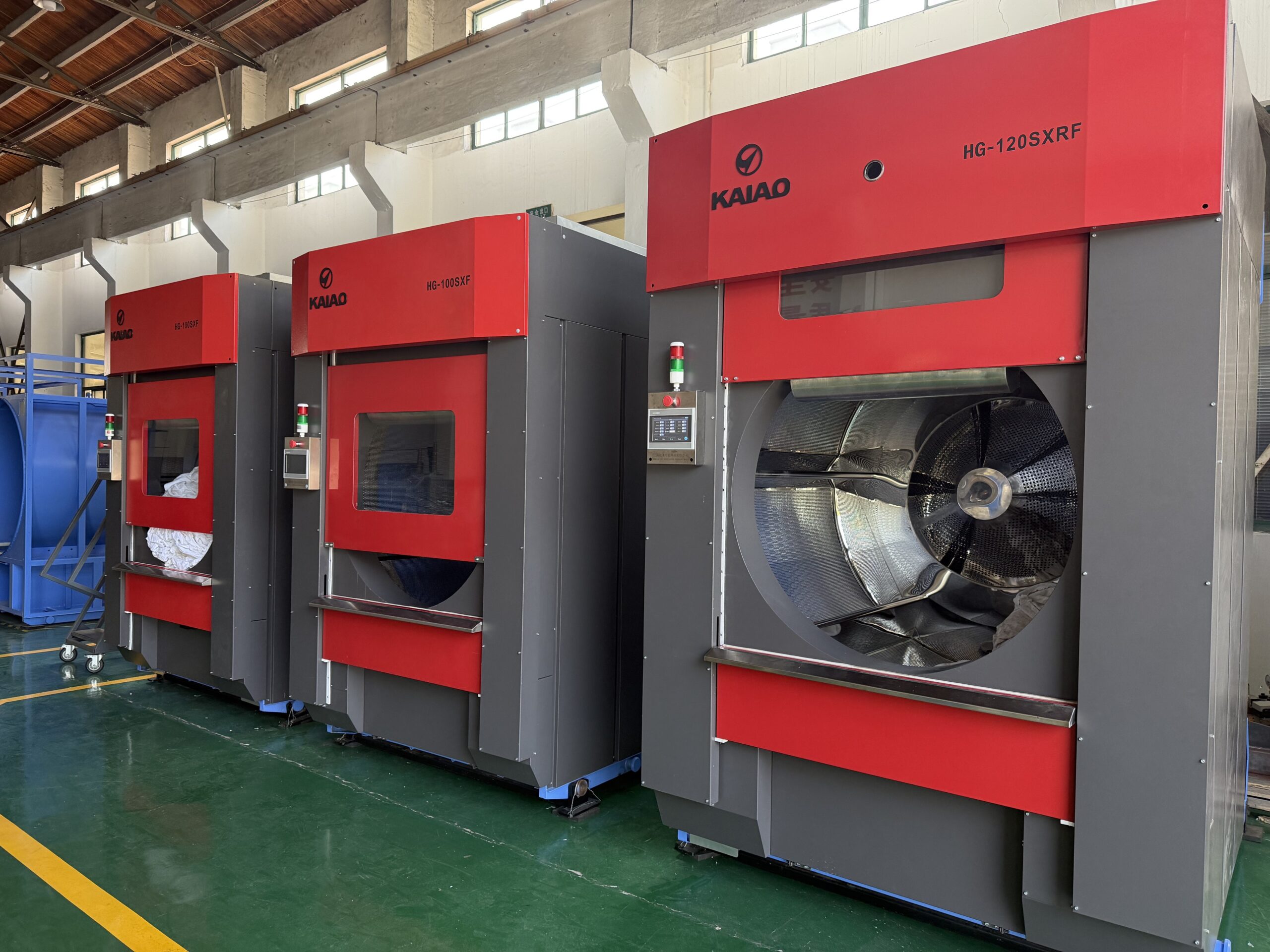
When upgrading equipment, many industry peers prioritize models equipped with high-efficiency heat recovery systems. For instance, Kaiao (KAIAO), a brand deeply rooted in the laundry energy-saving sector, has optimized its gas combustion systems for high-load factory production. By pairing precise temperature controls with waste heat recovery devices, they have further reduced gas consumption per unit of linen, making their equipment perfectly suited for hotel, hospital, and uniform laundry scenarios.
### Summary: How to Choose?
When selecting equipment, you cannot look at energy consumption in a vacuum.
Plants without boilers should prioritize gas models.
Plants with access to stable, low-cost steam can opt for steam models.
Small-scale or temporary processing facilities should consider electric heating.
Only by matching your equipment selection with your actual production capacity, local energy prices, and energy-saving technologies can you truly compress drying costs and boost your factory’s bottom line.