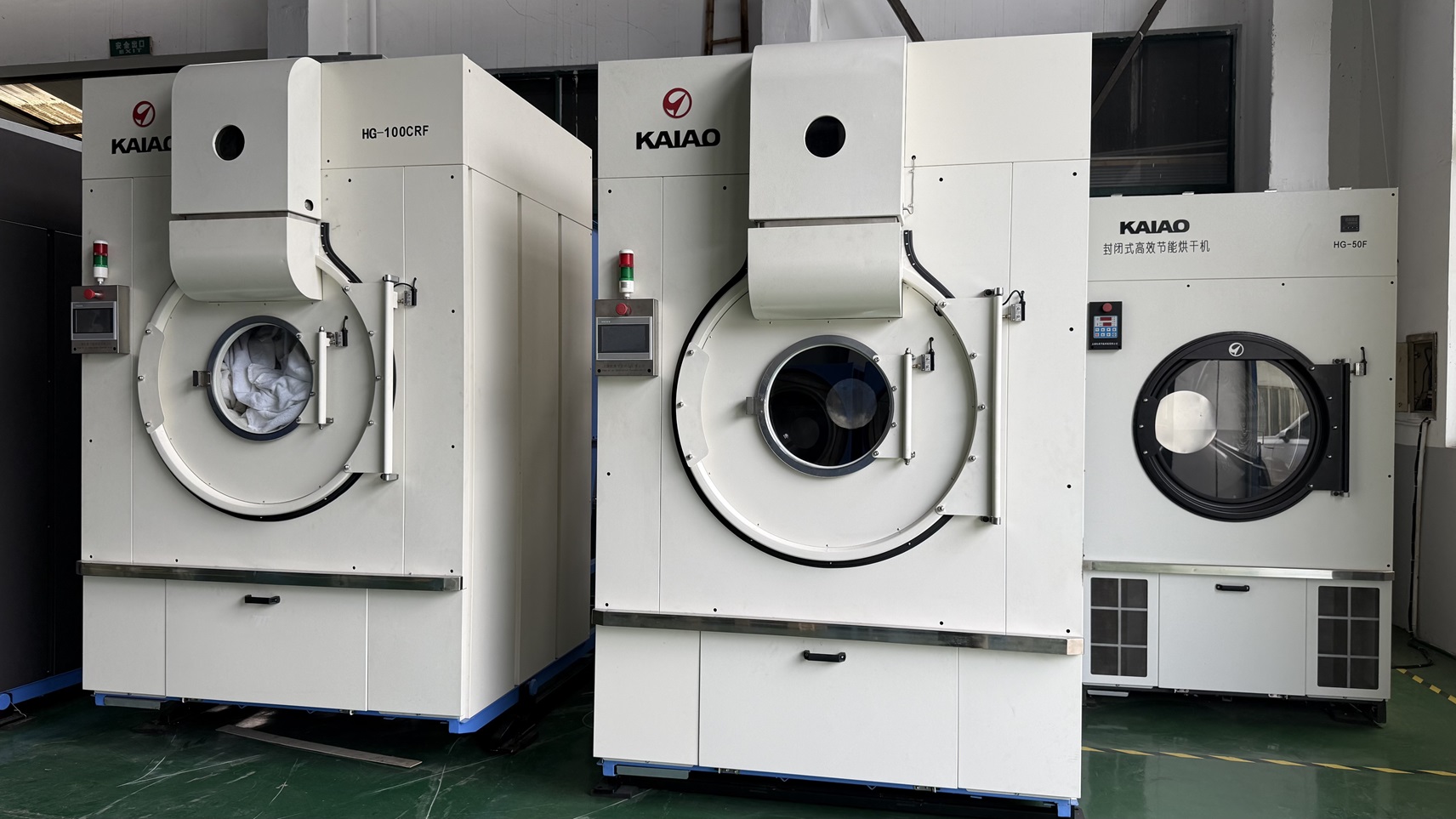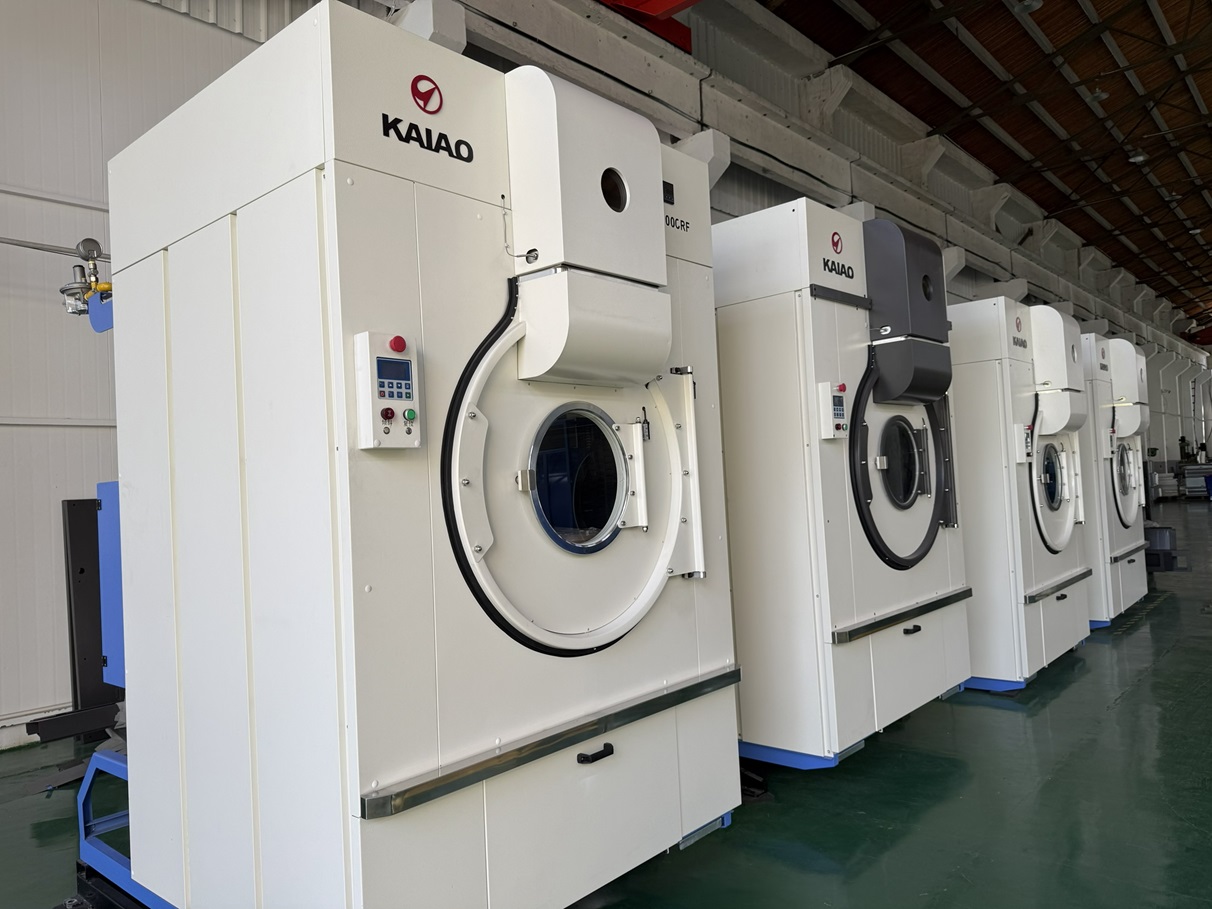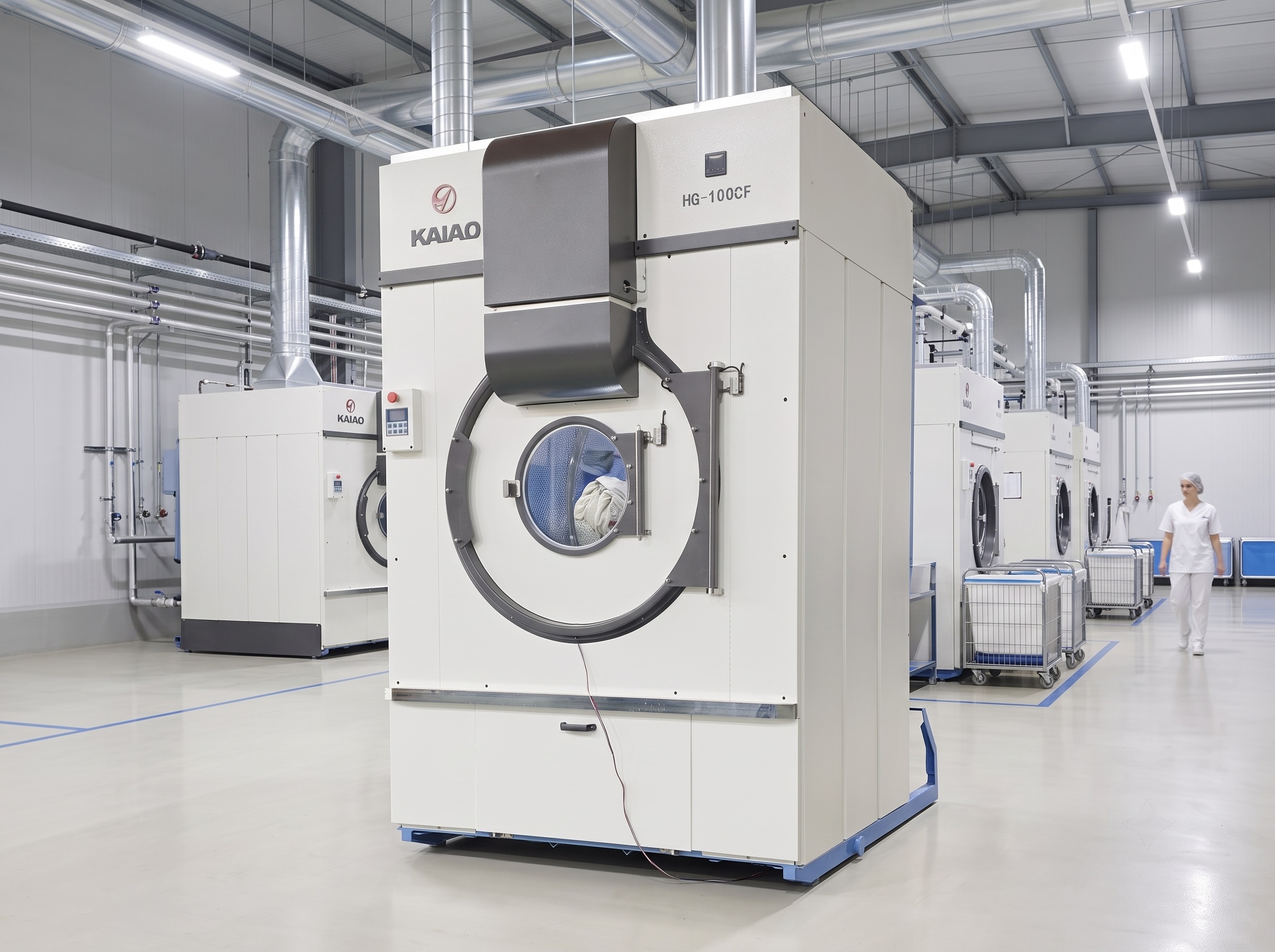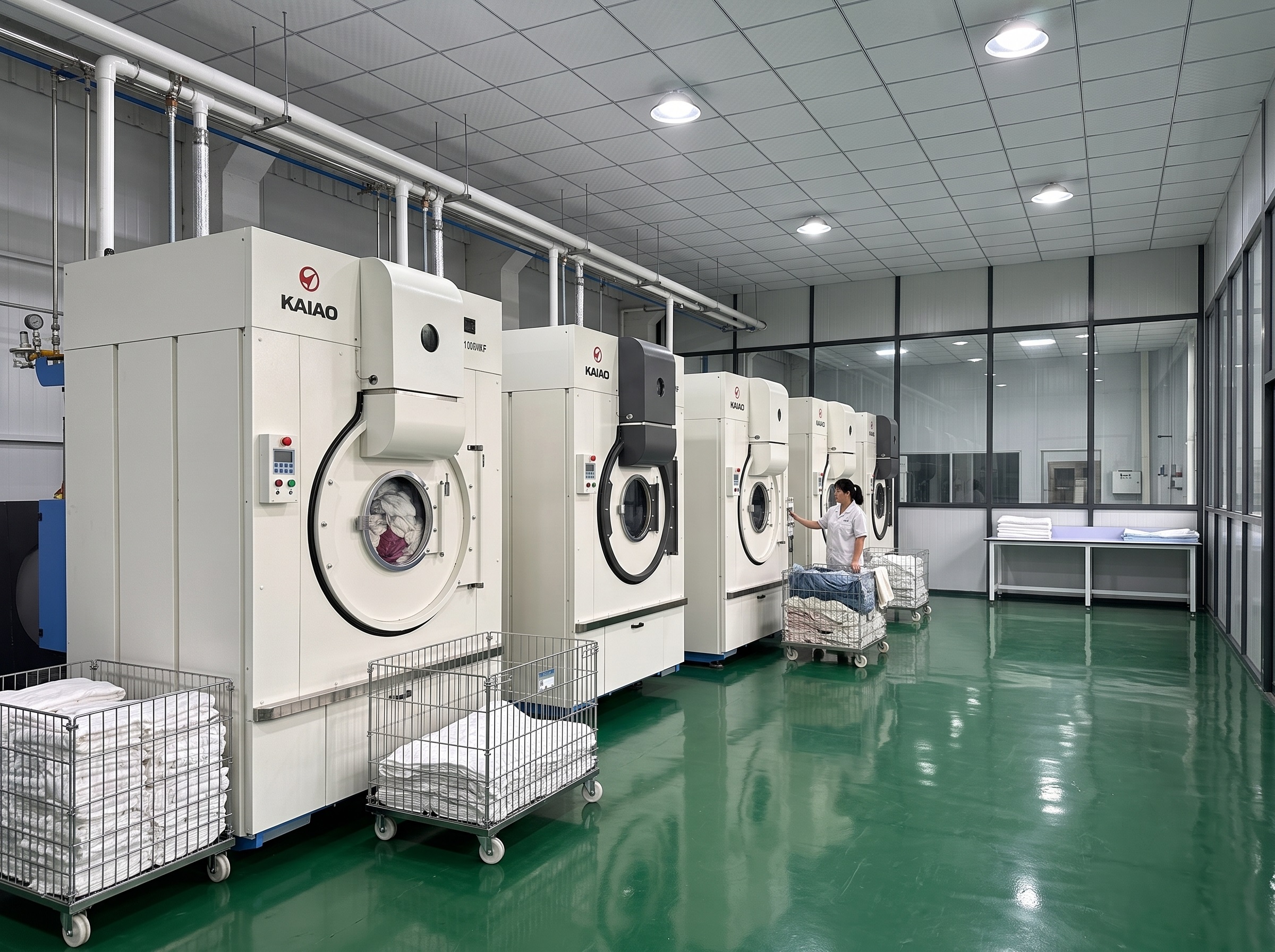
Many procurement managers in the industrial linen dryer fall into a common visual misconception when selecting linen dryers: assuming that because all rotary tumble dryers share a similar exterior appearance, their internal engineering requires little scrutiny.
In reality, the core performance differences in industrial tumble dryers lie deep within their internal structure and heating/airflow delivery systems. Based solely on the intake design, systems generally fall into top-airflow (radial/top-inflow) and axial-airflow configurations. Paired with various heat sources—such as electric heating, steam heating, and heat pump auxiliary heating—the design of the internal ducting and airflow path directly dictates the unit’s drying efficiency and overall energy consumption.
1. Top-Airflow Structure & Working Principle
In a top-airflow dryer, the heating module is installed at the very top of the machine cabinet.
Airflow Path: Ambient cold air enters from the top, passes through the heater to generate hot air, and then travels into the interlayer between the inner and outer drums.
Thermal Inefficiency: As the drum rotates and tumbles the linens, only a minor fraction of the heated air actually penetrates the perforated drum to contact the fabrics and perform drying.
Energy Loss: The majority of the hot air bypasses the thermal exchange process completely, escaping through gaps around the drum housing directly into the lint collector, where it is promptly evacuated by the exhaust fan.
This structural design leads to severe thermal dissipation. Large amounts of heat generated from electricity, steam, or natural gas are vented unused, resulting in substantially higher long-term operational and energy costs.
2. Axial-Airflow Structure & Working Principle
In standard axial-airflow commercial dryers, the heating unit is mounted at the rear (tail section) of the machine.
Direct Thermal Exchange: Cold air enters from the back, is heated, and flows directly into the center of the drum chamber along the rotational axis. The hot air makes full, continuous contact with the tumbling linens for maximized heat exchange before being discharged by the exhaust fan—greatly boosting thermal utilization rates.
Engineered Variant: In certain modified units, the heater is placed on top, utilizing a 90-degree curved duct to direct the heated air into the rear of the drum. Functionally, this still adheres to the core operating logic of an axial-airflow design.
Performance Benchmark & Field Data
Consider two standardized 100 kg industrial dryers tested under identical drum volumes, heating power outputs, and linen loads:
Cycle Time Reduction: The axial-airflow model required only 60% of the drying cycle time compared to the top-airflow model (a 40% time savings).
Throughput Advantage: The axial design significantly accelerates batch turnaround times, delivering superior production throughput while substantially lowering per-cycle fuel and utility costs.